Aircon gas top-up in Singapore
An aircon’s refrigerant, the gas, circulates in a sealed loop between the indoor and outdoor units. If there’s too little of it, the unit runs but cools poorly. A gas top-up visit measures the pressure, looks for where the gas has gone, and adds refrigerant to the right level.
Tell us which units are cooling poorly and what you’ve noticed, and we’ll pass it to a partner aircon firm, which checks the system, tells you what it finds and quotes before adding anything. A good visit checks for a leak first, because a top-up alone only buys time if the gas is escaping.
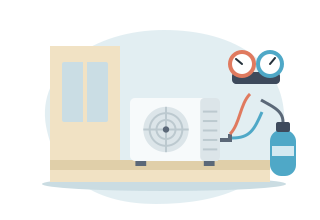
What a aircon gas top-up includes
The partner firm confirms what its price covers when it quotes. Usually, in this order:
- 1
Pressure measured
Gauges are connected to the service port on the outdoor unit to read the refrigerant pressure while the system runs.
- 2
Cooling checked
The technician measures the temperature of the air coming out of the indoor unit and looks at the coil and pipes, since dirt and airflow problems can look like low gas.
- 3
Leak looked for
Joints, flare nuts, valves and visible pipework are checked, often with a leak detector or soapy water, and any oily stain that marks an escaping refrigerant is pointed out.
- 4
Refrigerant added
If the system is short, the right refrigerant for the unit, shown on its label, is added in measured amounts until the pressure and cooling are where they should be.
- 5
Result explained
You’re told what the pressure was, what was added, whether a leak was found, and what the firm would recommend if one was.
Finding and fixing a leak is a repair, priced separately. If the firm finds a leak, ask for the repair price before the top-up, so you aren’t paying for gas that will escape again.
When people book it
- A unit blows air that isn’t cold, even though the filters are clean and it has been serviced.
- Ice or frost forms on the pipes or on the outdoor unit.
- A unit has been moved, reinstalled or repaired, and the firm needs to check the charge.
- A previous technician said the gas was low, and you want it checked properly.
Why gas isn’t normally used up, and why a top-up is rarely the whole answer, is explained in OurKampung’s aircon servicing guide, a sister guide run by the same team.
What a aircon gas top-up deals with
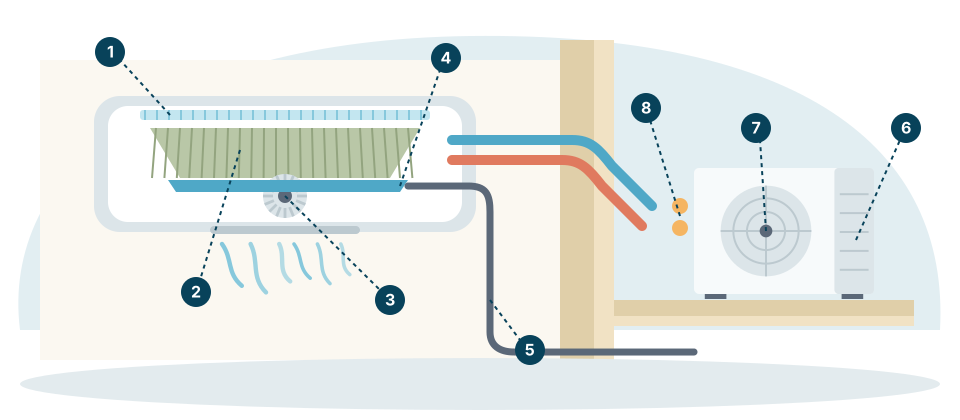
- 2
Cooling coil · Indoor
Looked at too, since a dirty coil can look like low gas.
- 8
Service valves · Outdoor
Gauges connect here to read the pressure, and the joints are checked for leaks.
What affects the price
It comes with a quick quote. The firm will ask about:
- Which refrigerant the system uses, since some cost more than others. It’s on the label on the outdoor unit.
- How much refrigerant is needed to bring the system back to its proper level.
- Whether there’s a leak to find and repair, which is priced separately.
- How many systems need checking. In a multi-split system, one outdoor unit serves several fan coils.
- How easy the outdoor unit is to reach, on a ledge, roof or high bracket.
Comparing quotes
Ask whether the price includes a leak check, how the refrigerant is charged, and what the repair would cost if a leak is found, so a top-up isn’t paid for twice.
How to prepare, and what happens on the day
Before the visit
- Note which units cool poorly, and whether they share an outdoor unit.
- Clean or check the filters first, if you can, since clogged filters cause weak cooling too.
- Make sure the outdoor unit can be reached, and clear the aircon ledge or the area around it.
- Find any paperwork from the last service or repair, especially if gas was added before.
On the day
- 1 The technician runs the system and connects gauges to the outdoor unit.
- 2 Pressure and cooling are checked, and pipes and joints are looked over for leaks.
- 3 If gas is needed, you’re told the price and whether a leak was found before refrigerant is added.
- 4 The system is run again and the pressure and cooling are rechecked before the gauges come off.
Afterwards
Notice how well the unit cools over the following weeks. If it weakens again soon, the gas is probably leaking, and the leak needs finding and fixing rather than another top-up. Keep the report showing what was added.
Aircon gas top-up in homes and offices
The same service is a different job in a flat, a landed house or an office. Here’s what changes.

HDB flats
Most HDB flats have a multi-split system, so one outdoor unit on the aircon ledge serves several rooms. If every room cools poorly at once, the shared outdoor unit is usually where to look; if one room does, it may be that fan coil’s pipe joints.

Condos
Condo outdoor units are usually on a ledge or in a service area. Check whether management needs to approve access, and tell the firm if the units share an outdoor unit.

Landed homes
Landed homes often have several separate systems, with outdoor units on the roof or high on a wall. Tell the firm which rooms are affected and where their outdoor units are.

Offices
Office systems vary from wall units on a single outdoor unit to larger ducted systems. Tell the firm the type of system and who manages the outdoor units, since access may go through building management.
R32 aircons and refrigerant handling
Many newer household aircons use R32, a refrigerant that is mildly flammable. The National Environment Agency (NEA) says that, to comply with SCDF’s requirements for handling R32 systems, service personnel should have completed a training course run by ITE: the Certificate of Competency in Residential Air-Conditioning System (Refrigerant). NEA publishes a list of technicians who have completed it on its refrigerants page.
The refrigerant is named on the label of the outdoor unit. If yours uses R32, you can ask the firm whether the technician coming has done the course before work starts.
Questions about aircon gas top-up
How do I know if my aircon needs gas?
You can’t tell for sure without gauges. Weak cooling has several causes, including dirty filters and coils. The firm checks the pressure before adding anything.
How long does a gas top-up take?
The check and top-up for one system usually takes under an hour. Finding a leak can take longer, and repairing it is a separate job.
Can the wrong gas be added?
Each system is designed for one refrigerant, named on the label on its outdoor unit, and that is what should be added. Ask the technician to confirm it before they start.
Who can handle R32 units?
NEA says that, to meet SCDF’s requirements, technicians handling R32 aircons should have completed ITE’s refrigerant handling course. You can ask the firm whether the technician has, before work starts.
Get a quick aircon gas top-up quote
Tell us the service, how many units and roughly where you are. It takes a minute, and there's no obligation to book.
Thank you. Your enquiry is on its way.
We usually reply within one working day. We'll pass your enquiry to a partner aircon firm, which will contact you to confirm the job and give you a quote.
There's nothing else you need to do. If you left something out, send another enquiry.